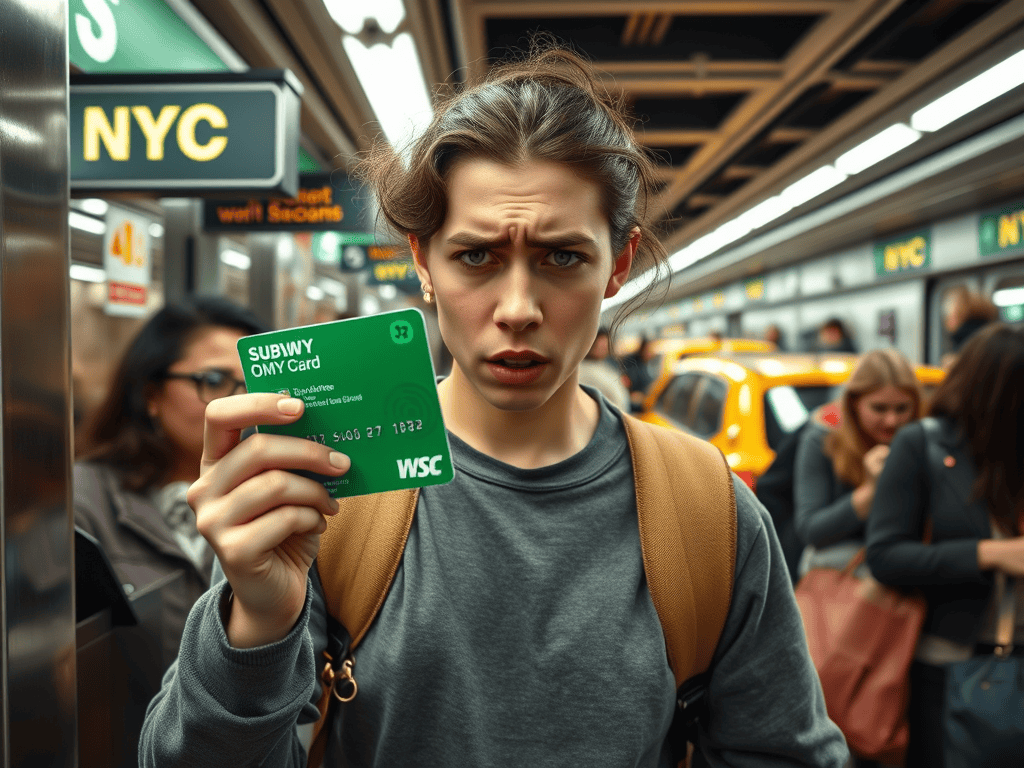
For hundreds of thousands of New York City students, the morning commute has become a high-stakes gamble. The transition from the iconic yellow MetroCard to the new green student OMNY card was supposed to modernize transit access, but for many, it has instead created a cycle of frustration, financial drain, and even legal risk.
As students and parents voice their concerns at public meetings and outside subway stations, a clear picture is emerging: the current student OMNY system is plagued by durability issues, technical glitches, and bureaucratic delays that are effectively creating barriers to education.
Why New York City Students are Demanding a Total Overhaul of the Student OMNY System
The student OMNY card program, which debuted in the fall of 2024, was intended to expand transportation access. Under the current rules, students who live more than a half-mile from their school and do not ride a yellow bus are eligible for a free card that covers four rides a day, 365 days a year. While this marks a significant expansion from the old MetroCard system—which only allowed three rides on school days during limited hours—the execution of the program has left much to be desired.
The Core Issues: Flimsy Materials and Technical Failures
The primary complaint from the student body is the physical quality of the cards themselves. Unlike the durable, credit-card-like OMNY cards sold to the general public in vending machines, the student version is made of a thin, flexible material that many say is unfit for daily use.
“Rain? Gone! Snow? Gone!” – The Durability Problem
Students report that these cards simply do not survive the rigours of a typical school year. Vinny Dong, a sophomore at Queens High School for the Sciences, shared his experience of going through six cards in a single year. He noted that exposure to rain or snow can ruin the card instantly, and even the simple act of “shoving it in your phone too hard” can render it useless. This “paper-thin” design leads to cards cracking, wilting, or malfunctioning when they get wet or bent in a student’s backpack.
The Inconsistency of Contactless Technology
Beyond physical fragility, the cards often fail at the turnstile for no apparent reason. Anthony Reid, a sophomore at Chelsea Career and Technical Education High School, described his morning routine as a “constant battle” with the OMNY reader. He recounted instances of the reader repeatedly flashing “tap again” or “card not accepted” before finally registering. For students, this fluctuation is more than just a minor annoyance; it is a source of daily stress that impacts their “sanity” and their ability to get to class on time.
The Social Impact: From Malfunctioning Cards to Fare Evasion
Perhaps the most serious consequence of these technical failures is the way they push students toward fare evasion. When a card fails and a student doesn’t have the $2.90 fare on hand, they are often left with an impossible choice: miss school or jump the turnstile.
The Pressure of Getting to Class on Time
Isaiah Tandjung, a senior at Francis Lewis High School, pointed out that “missing school isn’t a realistic option”. Consequently, many students feel forced to jump turnstiles or enter through emergency doors just to avoid being late for first period. This isn’t just about rebellion; it is a pragmatic, albeit risky, response to a failing infrastructure that advocates say acts as a barrier to getting kids into classrooms.
Strained Relations with Law Enforcement
Forcing students into fare evasion also increases the likelihood of “clashes with the police”. In a city where transit policing is a high priority, a malfunctioning free pass can lead to a student being ticketed or detained. Transit advocates from Transportation Alternatives argue that the current system’s unreliable card replacements and sudden deactivations leave students stranded and vulnerable to legal consequences.
Systemic Barriers: Eligibility and Red Tape
The physical failure of the cards is compounded by a system that many find exclusionary and slow to respond to problems.
The “Half-Mile” Rule and Who Gets Left Behind
Currently, eligibility is largely reserved for students living more than a half-mile from campus. Parents and students have criticized this cutoff, noting that even a “short” commute on paper can be “tricky in real life”. Furthermore, students who ride yellow buses are excluded from receiving the cards, a policy that some, including Vinny Dong, believe should be replaced with universal access for all students regardless of distance or bus status.
The Replacement Logjam
When a card is lost or breaks, the process of getting a new one is notoriously slow. While the Department of Education (DOE) has delivered over 890,000 passes to schools, the administrative burden of replacing them is significant. Students and school staff report that it can take weeks or even months for a replacement card to arrive. During this “replacement wait,” which can stretch beyond 30 days, students are often forced to pay out of pocket, a burden that quickly drains the wallets of NYC families.
The Path Forward: Demands for Reform and Future Solutions
In response to the mounting pressure, the city’s Panel for Education Policy (PEP) recently passed a resolution calling for sweeping changes to the student transit program.
The PEP Resolution: A Blueprint for Change
The resolution approved by the PEP demands several key improvements:
- Universal Access: Providing OMNY cards to all students, regardless of their distance from school.
- Unlimited Rides: Moving beyond the current four-ride-per-day cap to allow students more freedom for extracurriculars and work.
- Durable Materials: Switching to the same sturdy plastic used for standard OMNY cards.
- Faster Replacements: Streamlining the administrative process to ensure students aren’t left stranded for weeks.
Digital Wallets and Hard Plastic: What the MTA is Planning
The MTA has acknowledged these issues and is exploring technical fixes. Officials have indicated they are looking into “hardier material” for physical cards. Perhaps more importantly, they are developing a digital pass pilot.
Scheduled for a rollout in the upcoming school year, this pilot would allow students to link their passes to a smartphone, potentially eliminating the need for a physical card for many. However, officials have stressed that physical cards will remain available for students who do not have or are not allowed to use smartphones, ensuring that digital progress does not create a new form of exclusion.
Summary: A Call for Equitable Transit
The student OMNY card was meant to be a tool for empowerment, yet its current flaws have turned it into a source of stress for NYC’s youth. Ensuring that students have a reliable, durable, and easily replaceable way to access the transit system is not just a matter of convenience—it is a matter of educational equity. As the city moves toward a digital pilot and considers more durable card materials, the voices of students like Vinny, Isaiah, and Anthony serve as a reminder that for a city to move, its students must be able to move first.
Leave a Reply